Rare disease diagnosis is a game of connect-the-dots played with incomplete information. Doctors see symptoms. They run tests. Sometimes, even after months of work, they run out of leads.
Then they get stuck.
A team at Boston Children’s Hospital decided to try something different. They took 376 cases that had been analyzed multiple times by specialists and gone nowhere. They added one more voice to the room: OpenAI’s o3 Deep Research model.
The model did not diagnose anyone. Let me be clear about that. Doctors did. But the model helped.
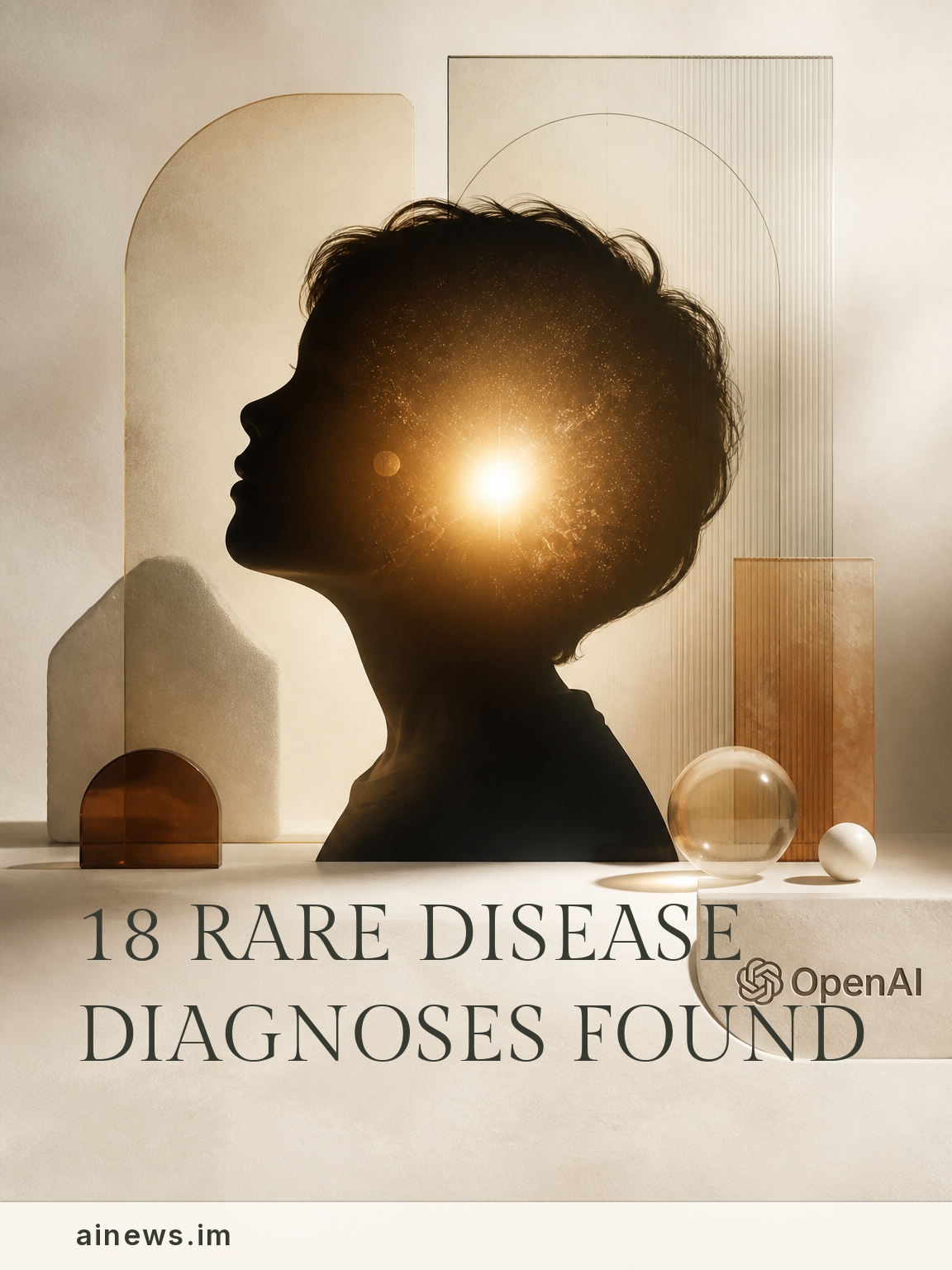
Here is what actually happened: o3 read the clinical notes, looked at the genetics, searched the literature, and suggested hypotheses. Doctors reviewed those suggestions, ordered new tests, and in 18 cases found what had been missing. Diagnoses in kids with rare developmental disorders, neuromuscular problems, early childhood psychosis. Two kids who died suddenly and needed answers.
That is 18 families who went from “we do not know what is wrong” to knowing. And knowing matters. It shapes what treatments you try. What you watch for. What you plan for.
The math is small: 4.8 percent additional yield. But zoom in and it is not. It is a child whose condition now has a name. A parent whose guessing is over.
This is the part I like about how they did it. Human doctors made the calls. The model helped them think. The model did not bypass them or replace them. The human stayed in the center, asking the questions that matter.
Not all AI news is about scale. Some of it is about the one kid in the room who now has an answer.
Book your free AI clarity call, NOW!
https://buff.ly/TpWy277
Sources:
https://openai.com/index/diagnose-rare-childhood-diseases/
https://www.nbcnews.com/tech/innovation/ai-boston-childrens-hospital-diagnose-rare-diseases-kids-openai-rcna350387
https://techbriefly.com/2026/06/19/openai-o3-model-diagnoses-18-rare-diseases-boston-children/
Repost this. Thanks.