
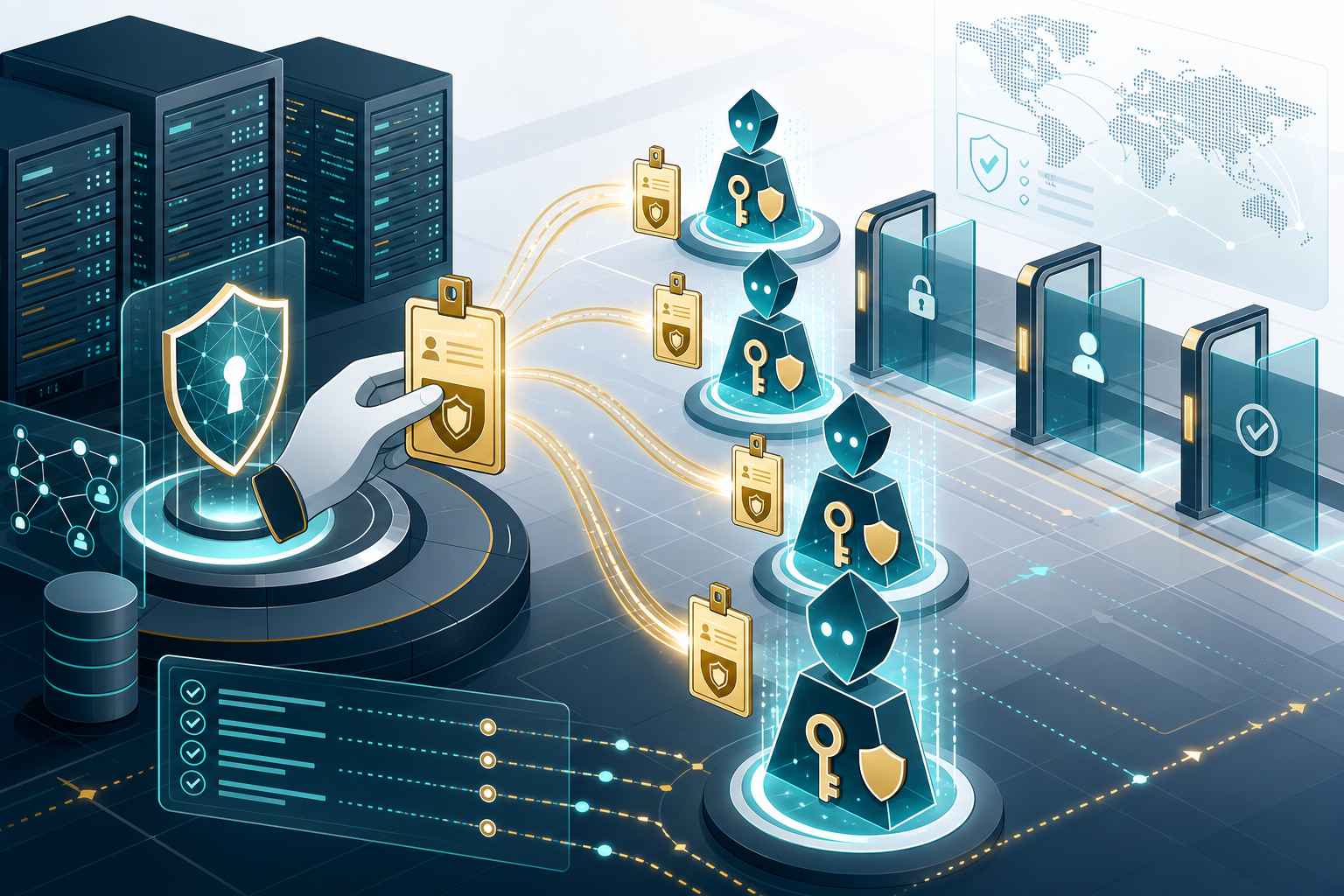
NewCore has emerged from stealth with $66 million in funding to build identity and access infrastructure for AI agents, TechCrunch reported on June 15. The story matters because enterprises are beginning to treat AI agents less like chatbots and more like software workers that need credentials, permissions, audit trails, and security policies.
What Happened
According to TechCrunch, NewCore is positioning itself around the problem of managing AI agents as they take on work inside companies. As agentic systems move from demos into production, they may read documents, update records, trigger workflows, call internal APIs, and collaborate with human employees. That creates a familiar but newly urgent question: what identity should an agent use, and how should an organization control what it is allowed to do?
The $66 million raise reflects investor interest in the infrastructure layer around enterprise AI. Many companies have experimented with assistants, copilots, and workflow agents, but security teams often slow deployment when agents need broad permissions or persistent access. NewCore’s pitch fits into a growing market for tools that can authenticate agents, assign limited permissions, monitor actions, and help organizations prove that automated systems followed policy.
Why It Matters
Agent identity is becoming a central enterprise AI problem. A human employee usually has a named account, role-based access, multifactor authentication, logging, and a manager who can approve or revoke privileges. AI agents need an equivalent governance model, but they also behave differently from humans: they can run continuously, delegate subtasks, call many tools in seconds, and operate across systems that were never designed for autonomous software actors.
Without strong controls, an agent connected to email, CRM, code repositories, finance systems, or customer databases could become a new attack surface. It might be tricked by prompt injection, inherit excessive permissions from a human operator, or take actions that are difficult to trace after the fact. A dedicated identity layer can help by making every agent visible, scoped, logged, and revocable.
Security Infrastructure for Agentic Work
The NewCore funding round is part of a larger shift from model selection to operational readiness. Enterprises are asking not only which model is best, but how AI systems will be governed once they are embedded in real workflows. That includes identity, permissions, secrets management, policy enforcement, observability, evaluation, and incident response.
If AI agents become common workplace actors, the winners in enterprise AI may not only be model providers. Infrastructure companies that make agents trustworthy enough for regulated environments could become essential. The immediate opportunity is to help companies move beyond pilots without forcing security teams to accept opaque automation.
Key Takeaways
- NewCore launched with $66 million to focus on identity and access management for AI agents.
- Enterprise agents need credentials, permissions, logging, and revocation mechanisms.
- The category reflects growing demand for AI infrastructure beyond foundation models.
- Security controls will be decisive for moving agentic AI from pilots into production.
Source: TechCrunch